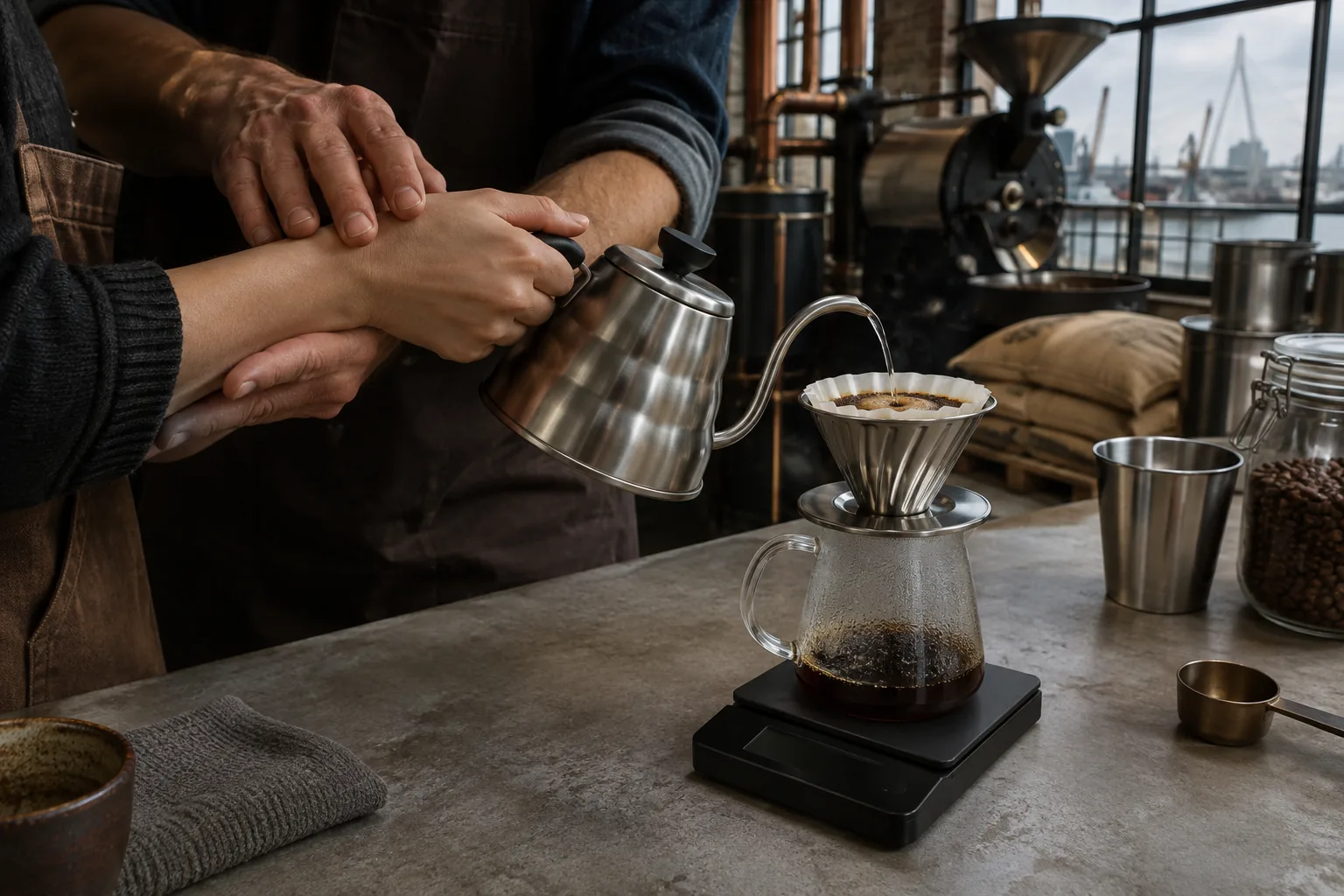
Weigh. Pour. Taste.
A recipe gives you something to repeat. Start with a scale, a timer and the same coffee. Then let the cup tell you what to change. These are starting points; your grinder, water and beans will affect the result.
15 g coffee. 250 g water.
Use a medium-fine grind and water around 94°C. Start with Ethiopia for a floral cup or Colombia for a rounder one.
Prepare
Put a matching paper filter in the dripper. Rinse it with hot water and discard the rinse water. Add 15 g of coffee and set the scale to zero.
Wet the grounds
Start the timer. Pour 45 g of water across all the grounds and wait until 30 seconds have passed.
Pour steadily
Pour to 150 g by about 1 minute. Then pour to 250 g by about 1 minute 45 seconds. These are total water weights, not extra amounts.
Drain and taste
Let the water drain through. About 3 minutes total is a starting point. Remove the dripper and taste as the cup cools.
18 g in. 36 g in the cup.
Use your taste as the test.
Keep the dose and water amount fixed while you compare grinds. Temperature can be your next experiment.
- Sharp and thinFor filter coffee, try a slightly finer grind. First check that every part of the coffee bed got wet.
- Dry and harshFor filter coffee, try a coarser grind and a gentler pour. Taste again after the cup has cooled a little.
- Balanced but too strongAdd a little hot water to the finished coffee. Note the amount so you can repeat it.
- Still hard to placeRead the origin notes. Some coffees have a brighter fruit edge even when well brewed.
Keep the next cup consistent.
Keep beans sealed in a cool, dry cupboard. Grind just before brewing if you can. Rinse your brewer after use and clean it as its maker advises. Use fresh drinking water. For very different results with the same recipe, check the grind and water before changing everything else.